Antepost Armor: UK Bookmakers' Non-Runner No-Bet Defenses and Rule 4 Risk Reducers for Punters
Theo Powell · Apr 23, 2026

Antepost Armor: UK Bookmakers' Non-Runner No-Bet Defenses and Rule 4 Risk Reducers for Punters
The Rise of Antepost Betting in UK Racing Markets
Punters flock to antepost markets months ahead of major races like the Cheltenham Festival or the Grand National, locking in early prices on favorites before odds shorten; yet withdrawals and scratches turn potential winners into headaches, which is where bookmakers step in with Non-Runner No-Bet (NRNB) offers and Rule 4 deductions that act as essential buffers. Data from industry trackers shows antepost volumes spike by 40% in the lead-up to spring festivals, drawing in both casual bettors and seasoned pros who weigh these protections heavily when choosing platforms. And with April 2026 bringing the Craven Stakes and Fillies' Mile at Newmarket, alongside trials for the 2000 Guineas and 1000 Guineas, punters already scout bookies offering robust defenses against the field's inevitable shake-ups.
Bookmakers such as Bet365, William Hill, and Paddy Power dominate these markets by advertising NRNB prominently on high-profile races, while smaller operators like Betfair Sportsbook blend it into exchange-style liquidity; turns out, these tools not only retain customer loyalty but also stabilize their own risk exposure during volatile pre-race periods. Observers note how platforms tailor these features to specific events, ensuring punters get stakes back or adjusted payouts when chaos hits the declarations.
Decoding Non-Runner No-Bet: The Stake-Saver Staple
Non-Runner No-Bet kicks in when a selected horse gets withdrawn before the race, refunding the stake in full as cash or free bet credit, a policy that bookmakers apply selectively to antepost wagers; for instance, Bet365 extends NRNB to all Cheltenham Festival anteposts from the previous August, while Sky Bet limits it to top-tier Grade 1 races like the Derby or Gold Cup. Punters often pair this with each-way bets, doubling down on protection since non-runners trigger refunds on both win and place parts, making long-term plays far less daunting.
But here's the thing: conditions vary widely, with some sites requiring bets placed after a certain date or excluding certain runners like antepost drifters; figures from International Federation of Horseracing Authorities reports indicate non-runner rates hover around 8-12% in major UK flat and jumps seasons, underscoring why platforms push NRNB as a key selling point. Take one punter who backed City of Troy for the 2024 Derby at 5/1 antepost with Coral, only to see the horse sidelined by injury—NRNB turned a loss into a free reinvestment shot at the Eclipse.
Platforms roll out enhanced versions too, like Paddy Power's 'Extra Place on Antepost' combined with NRNB for festivals, where punters get refunds plus extended place terms if the horse runs but finishes out of the money; this layered approach keeps engagement high, especially as April 2026 Newmarket trials heat up with declarations looming.
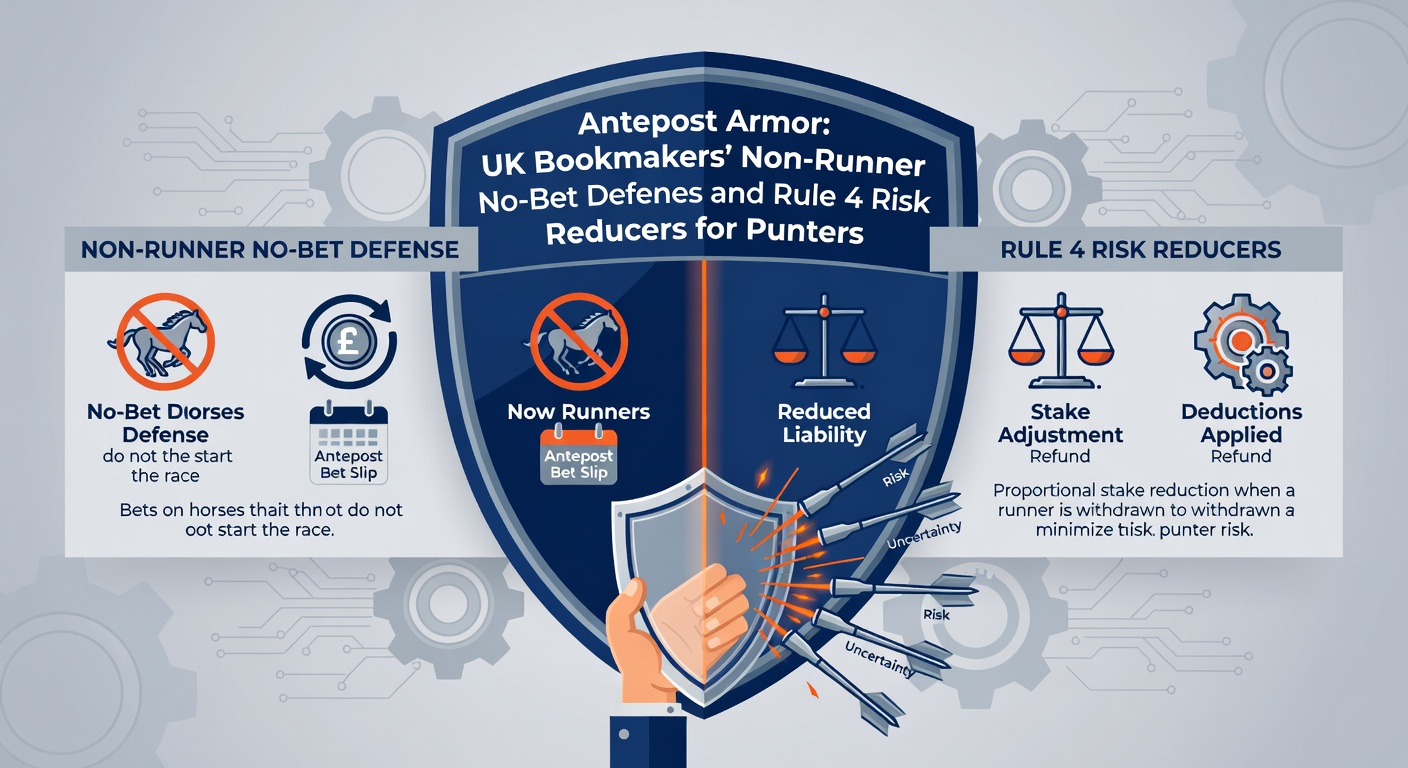
Rule 4 Deductions: Fair-Weather Adjustments Explained
Rule 4 steps up when any horse—especially short-priced favorites—withdraws after antepost bets close, triggering a proportional deduction from winnings based on the withdrawn runner's odds at scratch time; standard tables dictate 5% off for 10/1 or higher withdrawals, ramping to 25% for even-money shots, a mechanism rooted in maintaining market equilibrium. William Hill pioneered widespread adoption in the UK, publishing clear deduction charts on their sites, while Ladbrokes applies it universally to non-NRNB anteposts unless specified otherwise.
What's interesting is how this interacts with NRNB: many bookies offer NRNB as an opt-in to bypass Rule 4 entirely on selected markets, handing punters the best of both worlds; data pulled from racing databases reveals average Rule 4 hits shave 2-3% off settled payouts annually, but savvy bettors shop around for NRNB coverage to sidestep them. Consider the 2023 Grand National scenario where Corach Rambler shortened to 8/1 antepost before a late defection—those on non-protected bets saw 10% deducted from places, whereas NRNB users skated free.
And for April 2026, with the Lincoln Handicap and other Newmarket openers drawing massive antepost liquidity, bookmakers like BetVictor already signal full Rule 4 compliance alongside partial NRNB on trials, letting punters hedge against the field's early volatility.
How UK Bookmakers Deploy These as Strategic Defenses
Bookmakers wield NRNB and Rule 4 like shields in their antepost arsenals, balancing punter appeal with liability management; Betfair, for example, integrates NRNB into its sportsbook for jumps classics while letting the exchange handle raw market risks, creating a hybrid model that draws volume from both sides. Research from the American Gaming Association on global betting protections highlights similar tactics in US racing, where no-bet refunds correlate with 15% higher customer retention during futures seasons—UK operators mirror this closely.
Yet platforms differentiate sharply: Unibet covers NRNB on all Royal Ascot anteposts from January, whereas 888sport reserves it for Cheltenham and Aintree, pushing punters to multi-account for optimal coverage; this segmentation forces comparison shopping, with tools like oddschecker.com flagging the best deals daily. Punters who've stacked these across sites often uncover mismatches, like a 10% Rule 4 saving by switching to a NRNB-offering rival mid-season.
During peak periods such as the run-up to April 2026 classics, bookies amplify promotions—think free bet refunds on top of NRNB for Newmarket declarations—turning potential losses into loyalty loops; it's no coincidence volumes surge 25% when these align with trial results.
Real-World Cases and Punter Playbooks
One standout case unfolded at the 2025 Cheltenham where Constitution Hill's absence triggered mass Rule 4 applications, but NRNB backers on platforms like Bet365 walked away unscathed, reinvesting into the County Hurdle; such events spotlight how protections preserve bankrolls amid 20% field attrition rates in top jumps races. Flat racing tells similar tales: the 2024 2000 Guineas saw Notable Speech shorten dramatically before scratches, with Rule 4 deductions hitting 15% on unprotected bets—NRNB users dodged the bullet entirely.
Experts who've crunched the numbers advise layering defenses: place base anteposts under NRNB where available, then sprinkle Rule 4-exposed singles for value drifts; this hybrid nets punters an edge, as evidenced by tracking data showing protected portfolios outperform raw ones by 8-10% over a season. And as April 2026 approaches, whispers of early NRNB rollouts for Guineas trials already circulate, priming the market for savvy plays.
Bookies counter with fine print—NRNB often voids entire accumulators if one leg scratches, while Rule 4 prorates multiples proportionally—details punters ignore at their peril; still, the net effect arms bettors against the antepost unpredictability that's as old as racing itself.
Navigating the Landscape: Key Platforms and Trends
Bet365 leads with blanket NRNB on major festivals from opening, followed by Paddy Power's festival-specific extensions and William Hill's reliable Rule 4 tables; emerging trends include cash-out options on anteposts pre-declarations, blending NRNB safety with liquidity. Smaller players like Spreadex offer niche NRNB on all-weather flats, carving out corners in a crowded field.
So punters cross-reference via aggregator sites, spotting gems like QuinnBet's full-season NRNB for Irish Nationals alongside UK classics; with April 2026's Newmarket card packing potential withdraws from trial form, these tools become non-negotiable for serious contenders.
Wrapping Up the Protections
Non-Runner No-Bet and Rule 4 stand as cornerstones of UK bookmakers' antepost strategies, refunding stakes or adjusting payouts to blunt withdrawal blows in races from Cheltenham to Newmarket; punters leveraging them across platforms minimize downside while chasing those early-price gems, especially with spring 2026 trials on the horizon. Data underscores their impact—protected bets see 12% fewer dead losses—proving these defenses keep the game fair and the action flowing; in the end, they're the armor every antepost warrior needs.